
Proven Methods to Become a Trusted Advisor to Private Banking Clients

Share

Singapore has seen a significant increase in its high net worth individual (HNWI) segment in recent years. This growth has been driven by Singapore’s strengths such as a strong track record as an investment and talent hub, a stable political system, strong rule of law, advanced infrastructure and depth of expertise in professional services. As a result, the private banking services industry catering to the HNWI segment has seen a rise in demand, and by extension, a growth in career opportunities in the arena.


For a thriving career in private banking, developing enduring relationships with clients is paramount. HNWIs who utilise private banking seek quality, individualised service and specially crafted financial solutions. Keeping these customers satisfied can result in returning customers, increased client loyalty, and word-of-mouth recommendations.


To uncover proven methods to build long-term relationships with private banking clients, we sat down with a respected leader in the wealth management and financial industry, Henk De Glint, the Managing Director and Senior Advisor for Singapore and Southeast Asia at JP Morgan Private Bank.


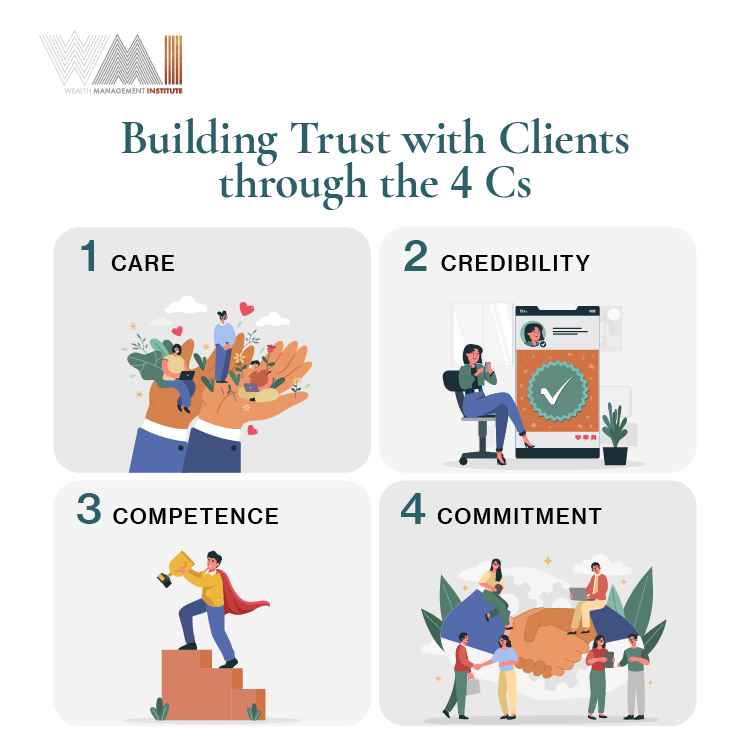
Building Trust with clients through the 4 Cs

Building enduring relationships with private banking clients requires trust. HNWIs have high standards for the financial services they receive. They want to work with individuals whom they can trust to manage their wealth and support them in approaching their financial goals. In order to build and uphold a high level of trust with their clients, private bankers must put forth considerable effort. This will ultimately help the banker to become a lifelong adviser and the main banker to the client.


This will ultimately help the banker to become a lifelong adviser and the main banker to the client. “Creating trust boils down to four C’s,” Henk advised. “You have to be caring, credible, competent, and last but not least, you have to be committed to your job and to the clients.”

“To achieve the 4C’s, you have to be genuinely interested in people, to show that you care, always be honest, authentic and sincere to stay credible, possess the appropriate skillsets and knowledge and embrace continuous learning to be competent and deliver on your promises to show that you are committed to getting your job done.”

What do you need to be good at to be a successful private banker?

Building strong and meaningful relationships with private banking clients requires a variety of skills and competencies.


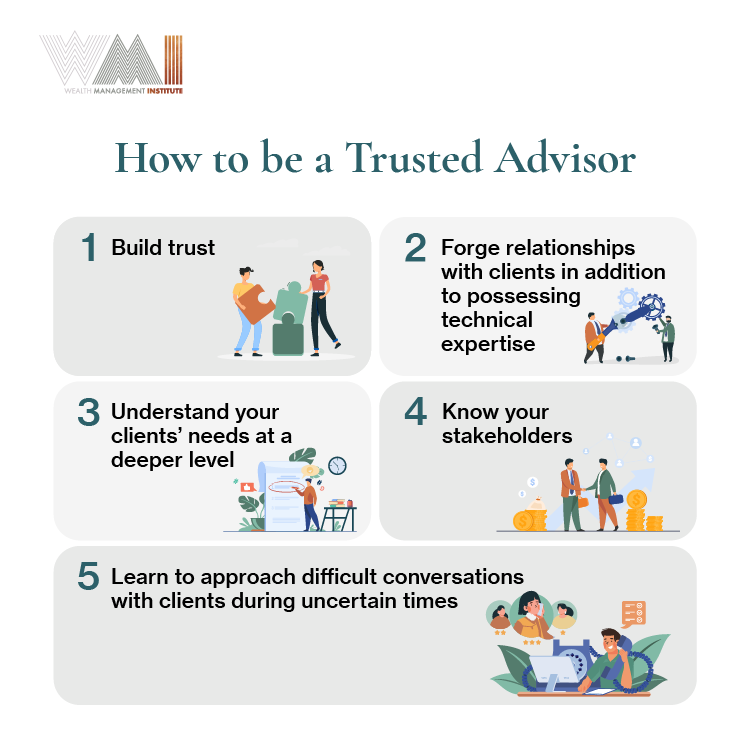
Henk says, “Private bankers must have the ability to forge relationships with their clients in addition to their technical expertise. It’s a combination of hard and soft skills and sharpening both your IQ as well as EQ. These are all elements and topics which we address in the training programs at WMI. In the relationship management module, we specifically address client management skills, like how to manage a book of customers as well as using effective communication in your dealings with clients and advancing your meeting and networking skills, including crafting a personal value proposition. We also look at how to manage difficult conversations and we practice in-depth client portfolio reviews.”


Understand your clients’ needs at a deeper level

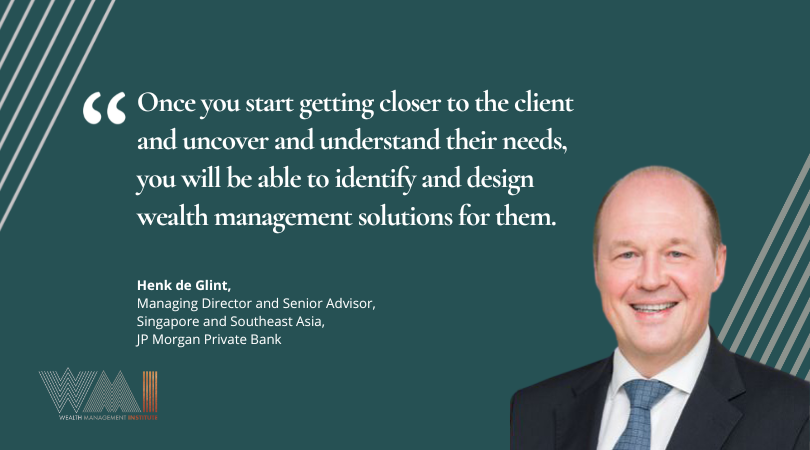
“In order to be able to meaningfully engage with clients, we have built the relationship management module around a framework which we call the Client Advisory Process”, Henk shares. “This is a consultative approach to address and manage all the wealth needs of HNWI’s, from their investment and family needs to their business concerns and passions. It will help the banker to build long-lasting and deeper relationships with their clients.”


It starts with getting to know your client, and building a dialogue through which you start to understand what is important to them. It is a journey to discover their needs, hopes, plans, expectations, goals and objectives as well as their expected returns, risk appetite and time horizon when it comes to their financial planning. This boils down to asking the right questions, using active listening skills and collecting input from the client.


Henk emphasised the necessity of private bankers avoiding self-serving behaviour and putting their clients’ needs ahead of their own. This is essential for developing long-term relationships with private banking clients, as clients are more likely to remain loyal and continue to do business with an advisor that they trust and believe has their best interests at heart.

Know your stakeholders

Understanding your stakeholders is an important aspect of building long-term relationships with private banking clients.


In the context of private banking, Henk explains that there are four important stakeholders to consider. “First and foremost is your client; you are a key person in preserving, managing and growing their wealth. Secondly, for the bank or the organisation you work for, you need to do business and grow the business. Thirdly, the regulator, as a private banker you are accountable and responsible for how you conduct your business and manage the client relationship. You need to work within the context of the private banking code of conduct and the rules and regulations. And last but not least, yourself and your ability to balance your family & friends, your network and your KPIs.


In my opinion, balance is the most important factor for someone who wants to get into this business and be a successful private banker. It is not only about the client, the bank, the regulator or yourself but it is a multitude of factors, which you need to consider in order to drive your business in a sustainable way for the long-term.” explains Henk.

Private bankers can offer a more comprehensive and integrated financial solution that takes into account the needs of all parties by having a thorough understanding of the stakeholders. Potential conflicts can be avoided, financial affairs can run smoothly, and a positive long-term relationship with all stakeholders can be fostered.


Learn to approach difficult conversations with clients during uncertain times

Economic and market uncertainty can lead to increased stress and anxiety for clients, and private bankers must be able to allay their worries and offer assurance. However, it is pivotal that private bankers are competent in delivering unfavourable information or counsel in a tactful, forthright, and open way.


By approaching difficult conversations effectively, private bankers can strengthen relationships with their clients and position themselves as trusted advisors.


Sometimes clients do want to make decisions based on emotions. In those situations, I always take a step back with them and advise them that if they just go with their emotions, which is something that we all try to do at times, they may not get the best outcomes or returns.

To achieve this, private bankers must develop strong and effective communication skills and the ability to empathise with their clients. They must be able to comprehend the issues that their clients are facing and respond to their inquiries in a clear and concise manner.


Additionally, honest and realistic assessments of the market and potential risks must be made by private bankers, who must also be able to offer workable solutions and strategies for reducing those risks.


In Conclusion

“Client engagement is all about building a deep connection and a long-term partnership between the client and you. The way you engage with your clients determines how the client thinks about you and drives finally client satisfaction. And client satisfaction impacts your reputation and ultimately your success as a private banker.”


He adds, “Don’t be afraid to make amendments in your personal development where you see fit, be energised and take ownership of your own career. To take ownership, possessing care, credibility, competency and commitment are pertinent and that is where upskilling has an important role to play.”


Learn to build long-term relationships in the world of private banking directly from industry veterans such as Henk at WMI’s Customer Relationship Management module, under Advanced Diploma in Wealth Management.


WMI’s Advanced Diploma in Wealth Management has a modular structure that allows you to select one or more modules based on your learning needs, job role or interest. Upon completion of all seven modules and assessments in three years, you will be recognised and accorded an Advanced Diploma academic qualification.


Speak with our Client Solutions team today to learn more!

Related Article

CEO Roundup

Alignment Under Pressure: The Real Test of Wealth Stewardship – CEO Quarterly Letter: Q2 2026 Highlights

Programme Overview

Upcoming Dates

Modules

Download programme brochure

Who Should Attend

Useful Links

Certification

Participants who successfully complete the programme will be awarded: 

Note:

Schedule

Modules

Testimonials

Enquire Now

Compliance, Risk & Governance

3 Reasons Why Private Bankers Should Learn About ESG

Programme Overview

3 Reasons Why Private Bankers Should Learn About ESG


The financial sector is experiencing significant shifts in a critical area—sustainability—alongside ongoing technological transformations. Traditionally, financial strategies have focused predominantly on maximising returns; however, a growing awareness of their environmental impact is giving rise to a new paradigm—one that today’s professionals may find challenging to navigate.


As more investors and institutions prioritise sustainability in their financial decision-making, recognising the long-term benefits it offers, the trend driven by the Environmental, Social, and Governance (ESG) framework is fundamentally reshaping our approach to wealth creation and responsible stewardship.

Mervyn Tang, who is Schroders’ Head of Sustainability, APAC, highlights three compelling reasons why private bankers should enhance their understanding of ESG to better serve their clients and future-proof their careers.


ESG: A Global Imperative Reshaping Investments


What was once a secondary consideration has now become a global imperative. The response to ESG issues, particularly climate change, is transforming how economies operate. “Governments around the world are putting policies to battle issues like climate change,” Mervyn says. “It’s changing the business models (and) the way our economy operates.”


As organisations navigate new regulations and seek incentives, such as those for electric vehicles, they must strike a balance between upfront costs and long-term objectives—ensuring their capital investments deliver sustainable returns over time.


Already, economies covering 90% of global GDP have set net zero targets, and over half of the world’s largest companies are aligning themselves with this vision. The results so far have been encouraging, with market research platform Gitnux reporting in 2024 that companies with strong ESG credentials have seen a 3-5% increase in annual revenue growth. Those with high ESG ratings also consistently outperform competitors who neglect them.


This shift creates a new role for private bankers. They’ll need to understand how these policies affect different industries, determine which are the reliable markers to prove sustainability, and how to position client portfolios for a sustainable future.


“Private bankers would be expected to talk about changes in sustainability and ESG policy in the same way as they are meant to talk about energy price inflation or Fed interest rates,” he surmises. “You’ll be expected to know more about ESG in the future.”


The senior professional explains how these fundamental concepts are discussed in WMI’s Certificate in Introduction to Climate Change and Decarbonisation Strategies programme. Besides gaining a broad perspective on topics such as climate science and international agreements in order to understand the global push for sustainability, the curriculum also includes training in core skills to assess and advise on green products and initiatives.


With outlets like Bloomberg indicating that the world’s ESG assets are projected to hit $40 trillion by 2030, informed finance professionals will stand out with their enriched knowledge and become invaluable assets to their clients’ evolving investment journey.


A Growing Emphasis Across Generations


The rise of ESG investing is not just shaped by policies. It is being fuelled by increasing demand from individuals, particularly younger generations.


“The general public is caring more about ESG,” Mervyn reveals. “You see this in search trends for things like sustainable investing and climate change.”


Figures from PricewaterhouseCoopers substantiate this observation, with a report citing that a whopping 83% of consumers expect companies to actively shape their ESG best practices, and that 76% would discontinue relations with companies which mistreat employees, communities and the environment.


“This is particularly apparent for younger generations like Gen Z or the millennials,” Mervyn notes.


A Stanford University study supports this, revealing that while only 30% of boomers were invested in ESG issues when it comes to their investments, this grew to 60% with Gen X, and became a pronounced 80% with Gen Zs and millennials.


“If these generations are more interested in sustainable investing, as we see the intergenerational transfer of wealth, more and more of your clients may want to talk about ESG in the future,” he predicts.


As ESG considerations grow increasingly complex, effective ESG investing requires integrating all three pillars—environmental, social, and governance—into the decision-making process. Beyond environmental factors, social considerations evaluate a company’s labour practices, diversity and inclusion policies, and its impact on the communities in which it operates. Governance focuses on leadership quality, transparency, and risk management practices.


WMI’s programme provides advanced modules that delve into these areas, equipping professionals with the skills to assess the right metrics and deliver comprehensive reports that support informed discussions on sustainability. By considering all three pillars of ESG alongside traditional financial analysis, private bankers can help investors capture an organisation’s long-term potential.


A Sustainable Future Unlocks New Investment Opportunities


In response to this accelerating trend, the financial sector is embracing the increasing demand for sustainable investment options.


“Sustainable investing options are increasing,” notes Mervyn, referencing both market trends and insights from his work at Schroders. “We’re talking about equities, fixed income, private assets. There’s a lot of things that your end retail investor can invest in to achieve their sustainability objectives and their financial objectives.”


The same report by Github reflects this sentiment in Asia, where 60% of retail investors have shown particular interest in ESF-focused funds, and that with the exception of Japan, allocation to ESG investing is expected to surge over 20% in Asia over the next five years.


Furthermore, the rise of digitalisation is democratising access to sustainable investments. Platforms such as crowdfunding now enable individuals to invest directly in emerging opportunities like green bonds and carbon offset initiatives—areas once limited to large institutional investors.


Rather than viewing this as competition, Mervyn emphasises that these developments highlight the need for complementary expertise. Informed private bankers can leverage their knowledge and these new tools to enhance their client offerings.


“More products means more options for your end clients to deliver what they need,” he says. “This is partly one of the reasons why asset managers are building up their sustainable investment product ranges. We see funds evolving from just your general sustainable funds to lots of different themes, to even direct private assets investing in things like renewable infrastructure.”


There’s more and more investment options for you to help cater to your clients’ financial objectives as well as sustainability objectives,” he adds.


Conclusion


The integration of ESG considerations into financial strategies is no longer a niche movement but a crucial complement to traditional finance. As private bankers navigate an evolving landscape, a solid understanding of ESG frameworks, reporting, and products becomes a vital tool for building resilient portfolios, managing risks, and fostering a more sustainable future.


WMI’s ESG programmes embrace this shift, offering a practical and industry-relevant syllabus designed by leading experts. Through engagements with senior professionals like Mervyn, participants gain real-world insights and case studies, equipping them to apply their knowledge effectively post-graduation—for the benefit of their organisation, clients, and the planet.

Upcoming Dates

Modules

Download programme brochure

Who Should Attend

Useful Links

Certification

Participants who successfully complete the programme will be awarded: 

Note:

Schedule

Modules

Testimonials

Enquire Now

Investing and Asset Management

Expert Advice on Building an Effective Multi-Asset Portfolio

Programme Overview

Upcoming Dates

Modules

Download programme brochure

Who Should Attend

Useful Links

Certification

Participants who successfully complete the programme will be awarded: 

Note:

Schedule

Modules

Testimonials

Enquire Now

Other Suggested Articles

Previous
Next